
Correct it once.
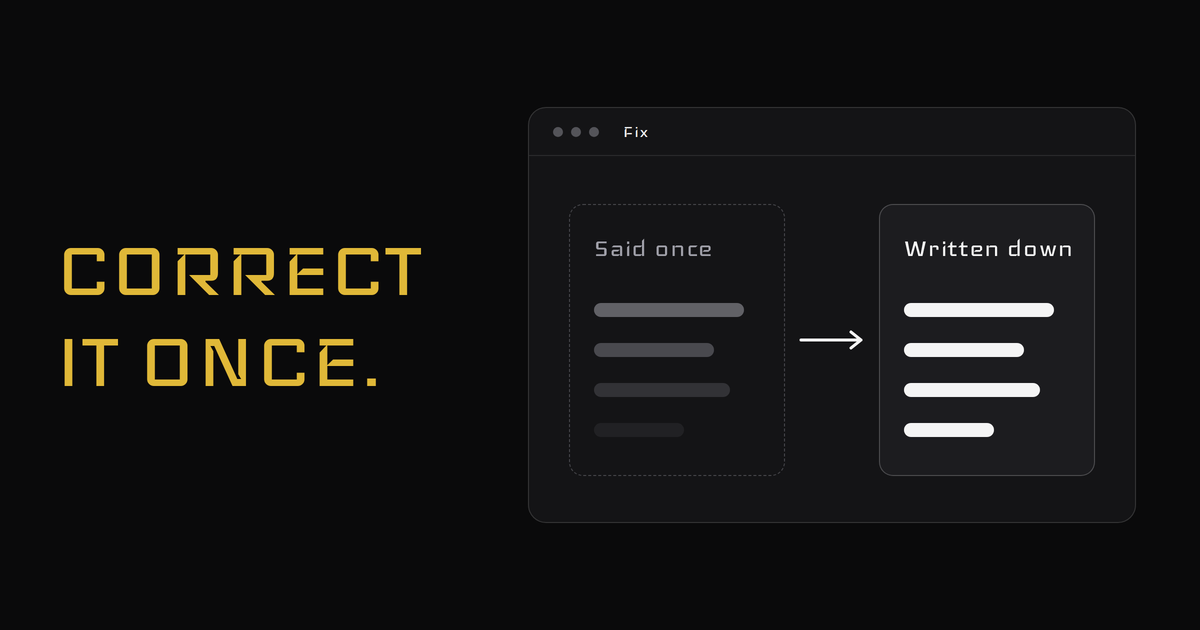
When your agent gets something wrong, the fix you type in chat works right away. Tomorrow, in a fresh conversation, it may be gone. The habit that makes a correction stick is simple: write it down where the agent reads first.
A correction in chat is a note on water
A correction in the middle of a conversation shapes the rest of that conversation. Then the conversation ends. The next one starts from the instructions, not from what you said yesterday.
So treat every correction as two steps. Fix the thing in front of you. Then decide whether it should be a rule.
Write it where the agent reads first
Every agent has a place it reads before it starts work. Its instructions. That is where a correction belongs if you want it tomorrow.
Put the new rule with the rules it relates to, not at the bottom of a long file. For how to lay those instructions out, see the instructions guide. For what carries over from one conversation to the next, read the memory between sessions guide.
One sentence, one rule, with the reason
Write the rule as one plain sentence. Then add the reason in a few words. "Write dates in full, because readers outside the team misread short dates."
The reason does real work. It lets the agent apply the rule to cases you did not list, and it tells you later why the line is there.
Say what to do instead, not only what to stop
"Stop writing short dates" leaves the agent guessing. "Write dates as November 13" tells it exactly what good looks like.
Every rule that starts with "do not" should end with "do this." A clear picture of the right result tends to help more than a list of wrong ones.
Date it and keep the old line until the new one is proven
Add the date next to each new rule. When a rule replaces an older one, keep the old line for now, marked as replaced, with the date.
Once the new rule has shown up correctly in real work, remove the old line. Until then, you can see what changed and when. The activity log guide shows how to keep that record easy to find.
Look back at the weekly review
Corrections pile up. Once a week, read the rules added since the last review. Merge any that say the same thing. Cut any that no longer matter. Check that each one still has its reason.
A short, current set of rules is easier for the agent to follow and easier for you to trust. The weekly review guide walks through the whole look back.
Check it: a made up reporting agent
Here is a correction for an invented agent that writes a morning report.
The report shows a date as 11/13. You fix it in chat and the report is rewritten. Then you open its instructions and add one line under formatting:
Write dates as November 13, because short dates are easy to misread. (Added November 13.)
The next morning, in a fresh conversation, the report reads November 13. The rule stays in the instructions, so it has a better chance of holding next week too.
The habit
Fix it in chat. Write it where the agent reads first. One sentence, one reason, what to do instead, and a date. Look back once a week. That is how a correction lasts past today.