Say what it may touch.
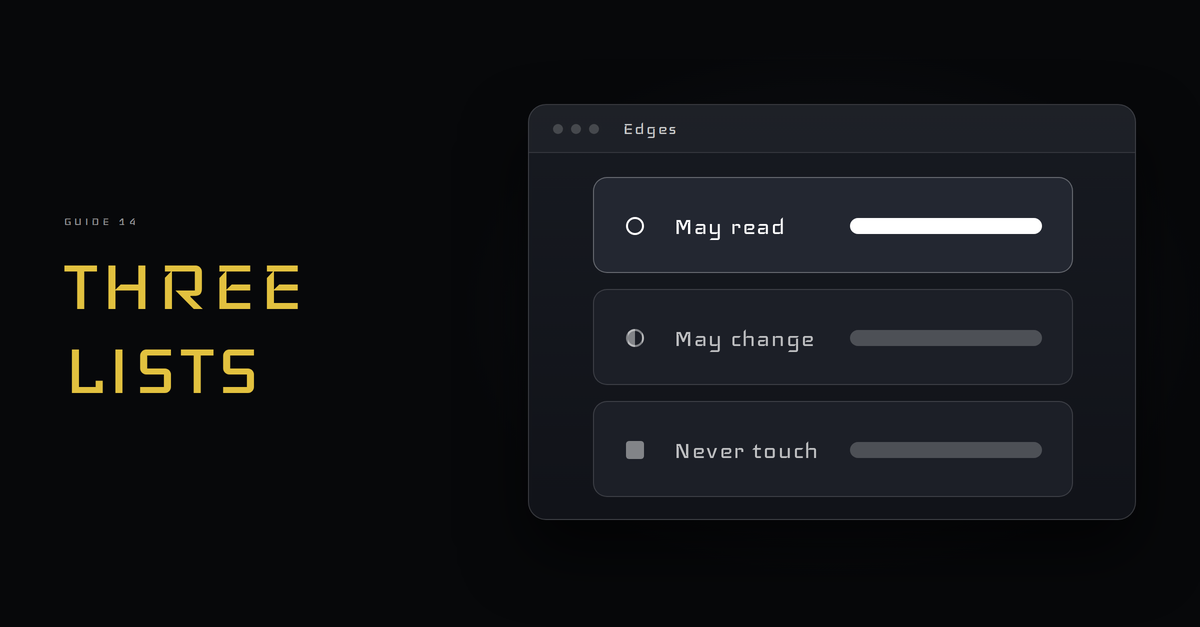
Give each agent a short list: what it may read, what it may change, and what it never touches. Write it down before the first run.
An agent needs edges
An agent with no limits will go wherever the job leads it. Edges give the agent a clear line to work inside. They also make it easy to tell, afterward, whether the agent stayed in bounds.
Three lists
Write three short lists for each agent.
- May read. What it can look at to do its job.
- May change. The few things it can create or edit.
- Never touch. Anything outside the job, kept clear on purpose.
Start narrow and widen one item at a time
Begin with the smallest list that lets the job get done. If the agent needs more, add one item, run it again and look at the result. A short list you can read in a glance is easier to trust than a long one.
Keep secrets out of reach
Passwords and keys belong on the Never touch list. Give an agent only what it needs for the job in front of it, and keep everything else out of its reach.
Write it where the agent starts
Put the three lists in the same place the agent reads its job, so they travel together. An agent that starts each run with its limits in front of it has them to hand.
Check the edges on every review
Make "Did it stay inside what it may touch?" one of the questions in your review step. A change that needs a person to say yes belongs in your approval workflow. Write down what each agent actually touched in the activity log, so the lists can be tightened or widened from what happened.
Check it: one agent's list
- May read: the draft folder and the style notes.
- May change: the draft for this week's post.
- Never touch: published pages, passwords and every other agent's work.
Three lists. Written down. One item at a time.